
 WHO'S CONFUSED ??? ... I see woodworkers every day who spend hundreds, even thousands of dollars on a table saw and never give a thought to the blades that are on the saw. Often they simply leave the blades that the saw comes with on the saw or ever worse, they go out and purchase a twelve dollar blade for it. Why would they do this you ask? ... because in most cases they really don't know what blades to purchase ... well we will attempt to demystify the agony of buying table saw blades. The truth is putting a good quality blade on a mediocre saw is far more effective than having crappy blade on an excellent table saw.
For natural lumber (i.e. not man-made woods) there are basically only two kinds of blade, Cross cut and rip. If you are working primarily with board lumber like oak, maple, fir, cedar, pine etc. you will NEED both "rip" and "cross cut" blades.
Rip Blades - are have fewer teeth, usually 24 to 30, and have large gullets in from to the teeth to help clear wood out as it is being cut. I prefer the Freud thin Kerf Ripping Blade for most applications . Most rip blades will havethree kinds of saw blades for Table saws, Cross Cut, Rip and Combination. I won't even get into all the specially blades, like plywood, metal etc., at least not right here. Rip blades will often come it an idustrial or full kerf with, which means the blade will cut a path one eighth thick through the board, or in a thin kerf which is often more preferable for under powered saws especially when you are cutting through hardwoods like oak or maple.
Available through Woodworkweb Amazon Store
Cross Cut Blades such as the Freud Sliding Miter blade will have between 60 and 80 teeth (or more) and will also be available in a full kerf or thin kerf width. Since with cross cut blades you are only cutting accross the grain of the board is is not as important to have a thin or full kerf blade as there is not as much wood being cut. You will also find cross cut blades have smaller gullets as not as much wood needs to be cleared away.
Available through Woodworkweb Amazon Store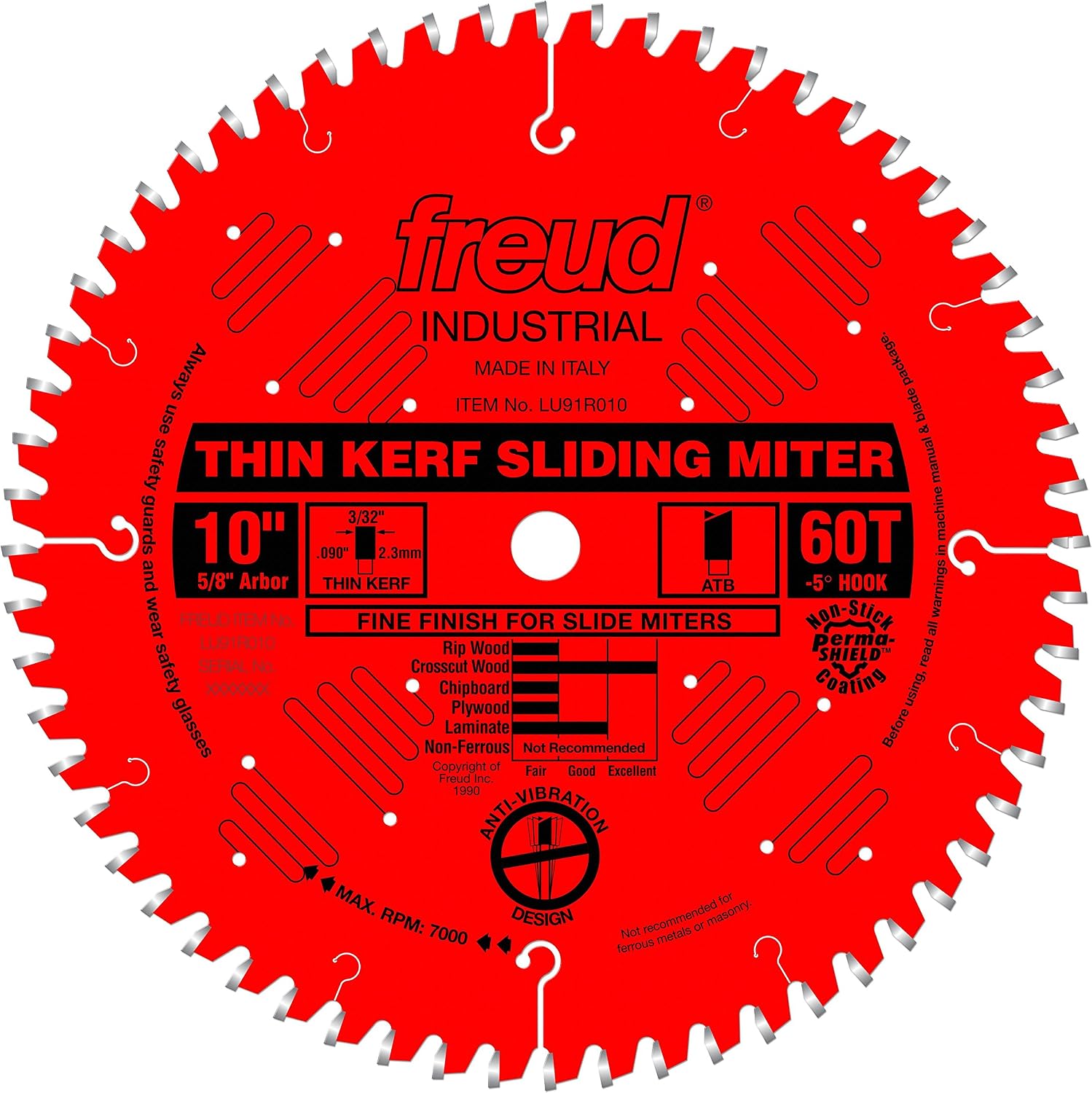
Combination Blades are by far the most popular group of blade because they often do an adequet job of most types of wood, natural wood, plywoods and MDF (medium desity fibre boards). Whe we say the do an adequet job, for many woodworkers, depending on the type of work they are doine, adequet is fine. If however you are making a fine piece of furniture, "adequet" is probably not good enough. Combination blades Like the Freud 50 Tooth Combination blade are great for more rustic furniture and general woodworking projects. Often combination blades are slow at ripping wood and don't cross cut as finely as a specific cross cut blade, but they are inexpensive and do OK jobs.
Available through Woodworkweb Amazon Store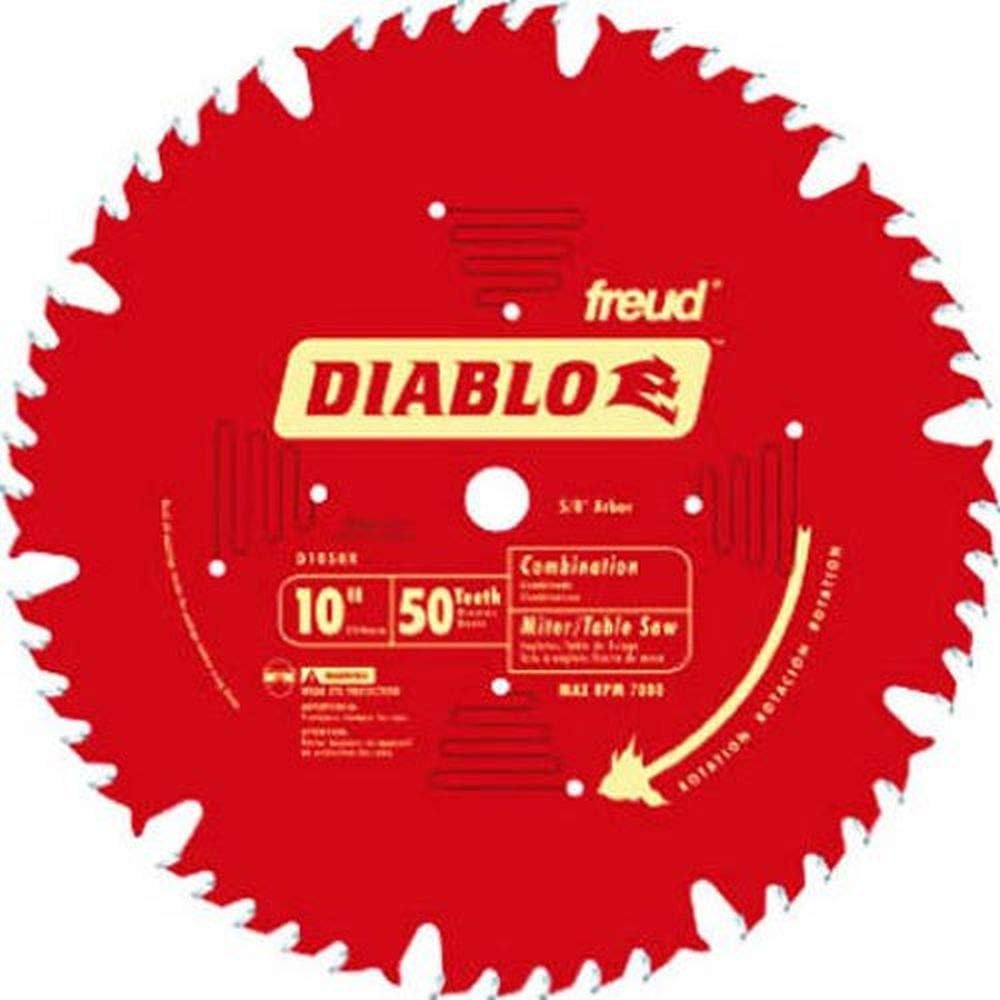
In terms of a Cross Cutting blade, that also works wonders on double sided Melamine (it cuts the top and the bottom with unbelievable crisp lines and NO TEAR-OUT) This blade is easily one of my top blades for crosscutting, the only blade that is better is the FULL KERF version of this same blade, and only because it tracks a wee bit straighter ... if you can actually see it ...
Available through Woodworkweb Amazon Store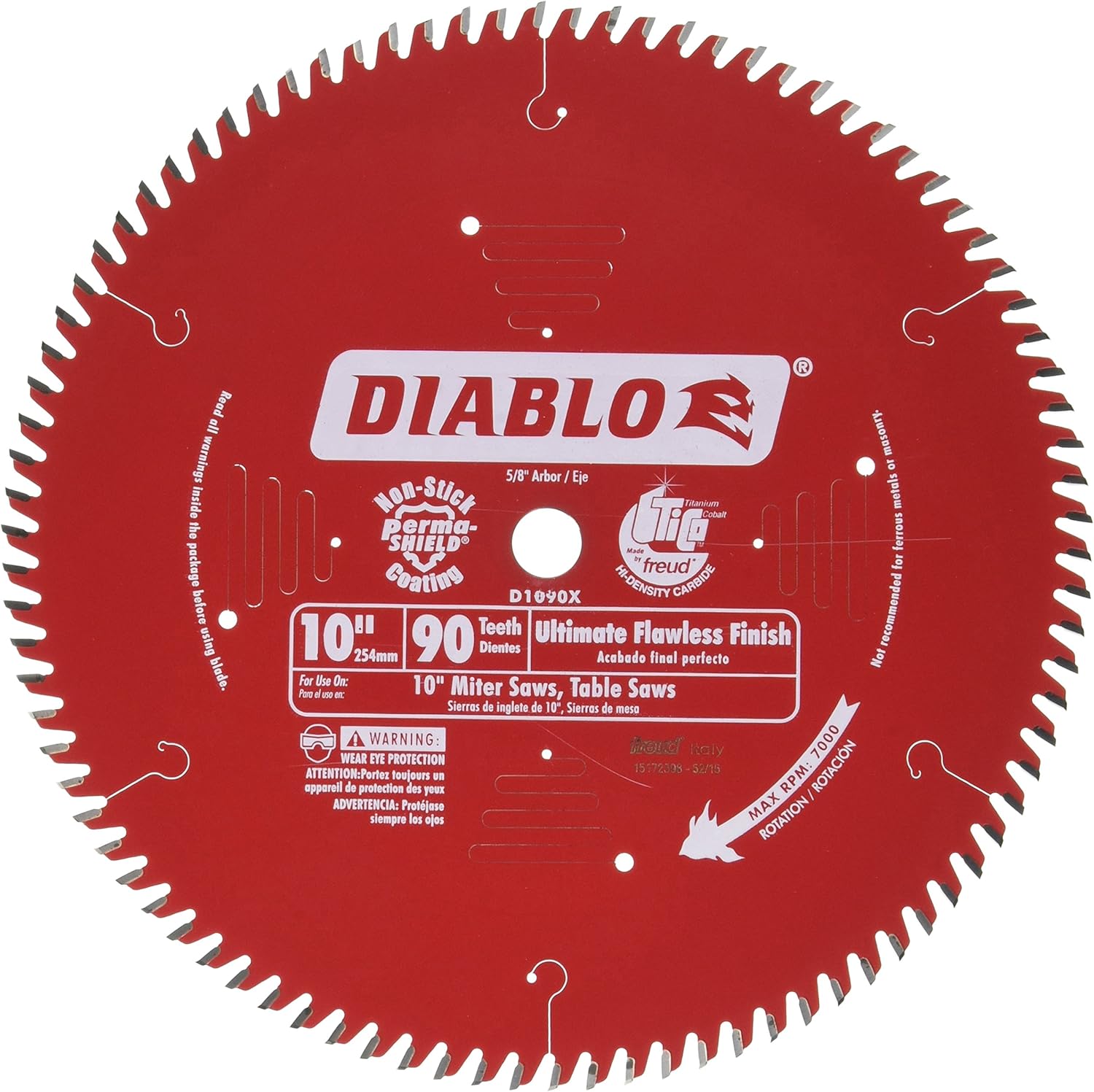
Copyright - Colin Knecht
Woodworkweb.com